

What A 100-Year-Old French Painting Can Teach Us About Preaching
Training In Paragraphs (TIPs) 65

In 1929, the French surrealist painter René Magritte caused a stir when he published the following piece…
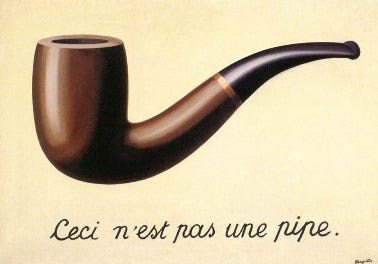
The text translates to, “This is not a pipe.” Magritte faced backlash from audiences for this provocative painting, but his response was simple…
The famous pipe. How people reproached me for it! And yet, could you stuff my pipe? No, it's just a representation, is it not? So if I had written on my picture "This is a pipe", I'd have been lying!
“It’s just a representation.” Magritte’s point is valid, and it applies to interpreting and preaching the Bible. When we come to a text describing some event (this applies especially to narrative texts), we must view and preach it not as the event itself, but a record of the event. For example, when we come to a text on the resurrection it is not the resurrection itself we are experiencing, but a record of the resurrection—and a record which chooses to focus on certain aspects and leave others out. Seeing texts this way helps us appreciate the author’s perspective and objective. And this helps us preach with greater confidence and variety.
This means a sermon on the resurrection from Matthew’s gospel should have different emphases than one from Luke’s. That’s how they meant it to be. That’s part of why there are four. When you come to one of these texts, your job is not so much to preach the resurrection as it is to preach a certain author’s record of the resurrection.
Preach the record. But you don’t have to stop there. After you unpack the author’s emphases, use the record to launch people into the reality—bringing it off the page and into their hearts and lives. Because René Magritte’s pipe may not be able to be “stuffed,” but the record of the resurrection can, in fact, bring life.